Pediatric 11 min read
Signs Your Child May Need Their First Dental Visit
The recommendation is age one, and almost nobody follows it. What to look for when you lift your child's upper lip, which behaviors signal tooth pain, what's genuinely normal, and what the first visit is actually like.
The guideline almost nobody follows
Ask most parents when a child should first see a dentist and you'll hear "around three", or "once all the baby teeth are in". The actual recommendation is considerably earlier: by the first birthday, or within six months of the first tooth appearing, whichever comes first.
That's not one organization's outlying opinion. The American Academy of Pediatric Dentistry, the American Dental Association, and the American Academy of Pediatrics all land in the same place.
The gap between the guideline and what actually happens isn't negligence. It's that a one-year-old with six teeth doesn't look like someone who needs a dentist, and nobody has explained why they do. The reason is that decay in baby teeth can start as soon as teeth exist, moves faster than in adult teeth because the enamel is thinner, and gives almost no warning until it's well advanced.
The first visit is also less about the child than parents expect. A large part of it is a conversation: bottle habits, what's in the sippy cup, how to brush a toddler who objects, whether the water at home is fluoridated, what a tooth-friendly snack looks like at eighteen months. Those are the things that determine whether we're filling cavities at four.
That said, plenty of families arrive here after noticing something. Here's what's worth acting on.
Signs you can see
Lift your child's upper lip and look along the gumline of the front teeth in good light. That's the area where problems show up first and the area normal brushing tends to miss.
- Chalky white patches near the gumline. The earliest visible stage of decay, before any cavity has formed. It looks like a faint white shadow and doesn't brush off. Caught here, the process can often be stopped or reversed.
- Brown or black spots, or a visible hole or notch. Decay that has progressed. It needs treatment, and in a small child it progresses quickly.
- Red, puffy, or bleeding gums. Gums shouldn't bleed during normal brushing at any age.
- A tooth that has turned grey, dark, or pink, typically weeks after a fall.
- A pimple-like bump on the gum above a tooth. This is a draining infection and always needs to be seen.
- Teeth that are crowded or overlapping severely in the baby dentition, which is the opposite of what you'd expect.
- A tooth chipped or knocked loose after a fall, even if your child seems fine.
Signs in how they eat and behave
Young children rarely say "my tooth hurts". They change their behavior instead, and the connection isn't obvious.
- Chewing only on one side, or avoiding a particular food they used to eat.
- Suddenly refusing cold things, or crying during drinks.
- Waking at night without another explanation, especially in a child who slept well.
- Persistent bad breath that isn't just morning breath and doesn't clear after brushing.
- Difficulty latching or feeding in an infant, which can point to a tongue-tie.
- Snoring, or breathing through the mouth consistently while asleep. Worth raising with us and with your pediatrician; our sleep and airway page explains why.
- Teeth not appearing at all by around 18 months, or a permanent tooth coming through behind a baby tooth that hasn't loosened.
Three things that mean go now
Don't wait for a routine appointment
- Facial swelling. A swollen cheek, jaw, or area under the eye, particularly with a fever, means an infection is spreading. This is same-day, and if swelling is affecting the eye or your child's breathing or swallowing, it's an emergency room rather than a dental office.
- A knocked-out permanent tooth. Handle it by the crown, never the root, put it back in the socket if you can, and if you can't, transport it in milk. The window is under an hour. Do not reimplant a knocked-out baby tooth, doing so can damage the permanent tooth developing above it. Save it and call us.
- Pain that stops your child sleeping or eating. Dental pain in young children doesn't resolve on its own, and medicating it for several days generally means arriving with a bigger problem.
We hold same-day slots for dental emergencies. Call (916) 451-4856 before driving over so the team can prepare a room.
What's normal and doesn't need a visit
Just as useful as the warning list. These worry parents regularly and generally shouldn't.
- Gaps between baby teeth. Actively a good sign. Baby teeth are smaller than the permanent teeth that replace them, so spacing now means room later. Tightly packed baby teeth predict crowding.
- Teething fussiness, drooling, and gum rubbing. Normal. A high fever, diarrhea, or a rash is not teething and should go to your pediatrician.
- Thumb sucking or a pacifier before age three. Very common and usually self-resolving. It becomes worth addressing if it continues past three to four, once it can start affecting the bite and the palate.
- Grinding during sleep in toddlers. Surprisingly common and usually outgrown. Mention it at a visit; it rarely needs treatment at this age.
- New permanent teeth that look yellower than the baby teeth beside them. Permanent teeth are naturally less white. Nothing has gone wrong.
- Wobbly baby teeth from around age six. On schedule. Let them come out on their own timetable.
One safety note that belongs here: avoid benzocaine teething gels in children under two. The FDA has warned against them because of a rare but serious blood disorder. A chilled (not frozen) teething ring and a clean finger to rub the gums are the safer route.
What the first visit actually looks like
Parents brace for a struggle. For a one- or two-year-old, the visit is shorter and gentler than expected, generally 15 to 30 minutes.
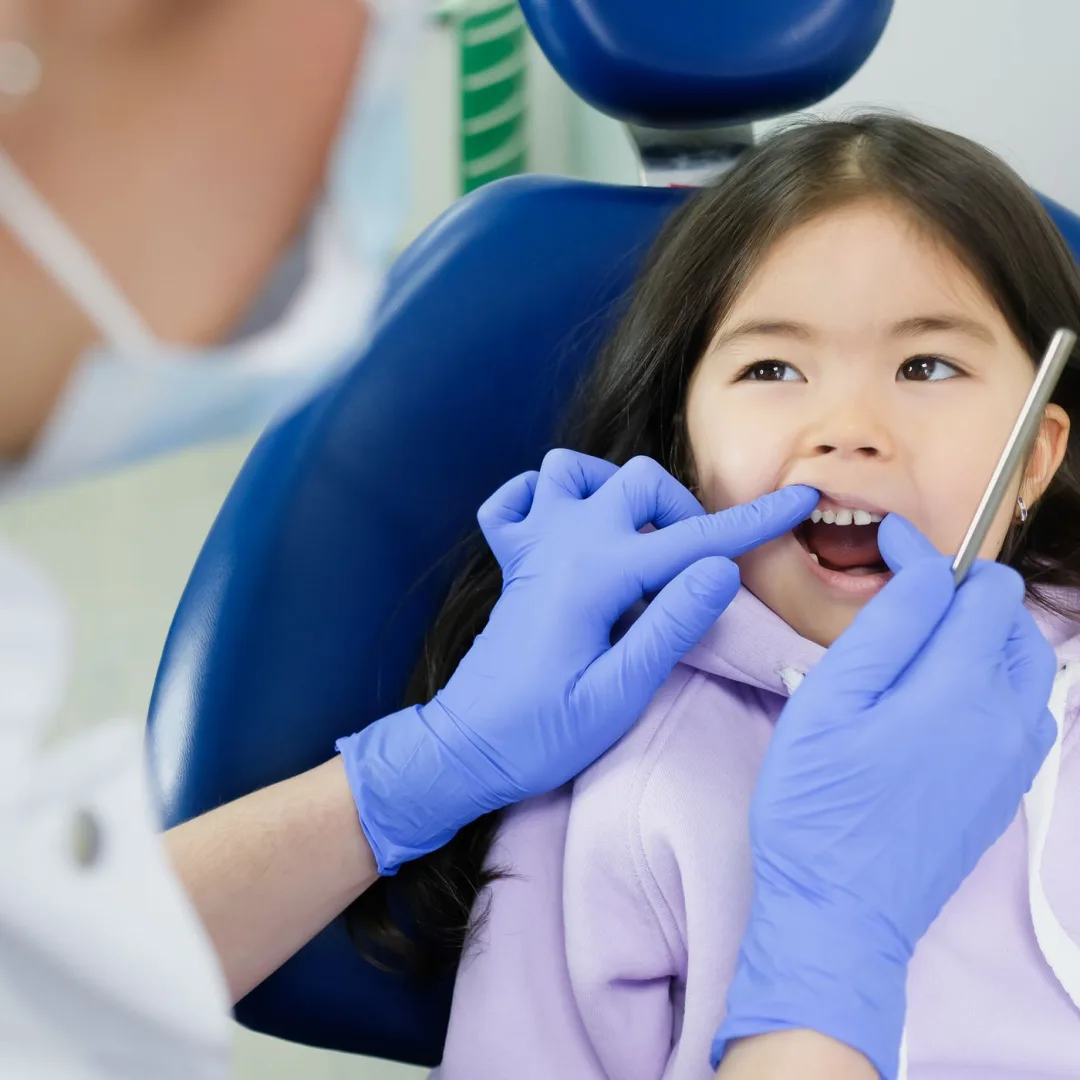
For the youngest children we often use a knee-to-knee exam: you sit facing the dentist, your child sits on your lap facing you, then leans back so their head rests on the dentist's knees. Your child spends the whole time looking at your face and holding your hands. It's quick, and it means no separation.
From there:
- We count teeth out loud, which most toddlers enjoy.
- We check for early decay, how the bite is coming together, and whether the tongue and lip attachments are restricting movement.
- We clean off any soft plaque, often with a toothbrush rather than instruments at this age.
- We paint on fluoride varnish if appropriate. It sets on contact and takes seconds.
- We talk with you about brushing, feeding, and what to watch for.
No drilling. Usually no X-rays. Some crying is entirely normal and isn't a sign the visit went badly, plenty of one-year-olds object to being on their back regardless of what's happening. Our pediatric dentistry page covers how we handle anxious children and what we do differently for a first visit.
How to prepare them, and what not to say
Timing does most of the work. Book a morning slot, after a nap, not when they're hungry or at the end of a long day.
The rest is mostly about language. Well-meaning reassurance is the usual culprit here.
- Don't promise it won't hurt. Introducing the word "hurt" plants the idea. Say the dentist is going to count their teeth and check they're healthy.
- Avoid loaded words, needle, drill, shot, pain. We use our own child-friendly vocabulary, and it works better if it's the first version they hear.
- Don't share your own bad experiences within earshot. Dental anxiety is learned more often than it's innate.
- Don't use the dentist as a threat for not brushing. It builds exactly the association we're trying to avoid.
- Do read a picture book about visiting the dentist, or play at counting each other's teeth. Familiarity beats explanation at this age.
- Do bring a comfort object. A blanket or toy is welcome in the chair.
Tell us when you book if your child is anxious or has had a difficult experience before. It changes how we schedule and how much time we allow.
Home care, age by age
Before the first tooth
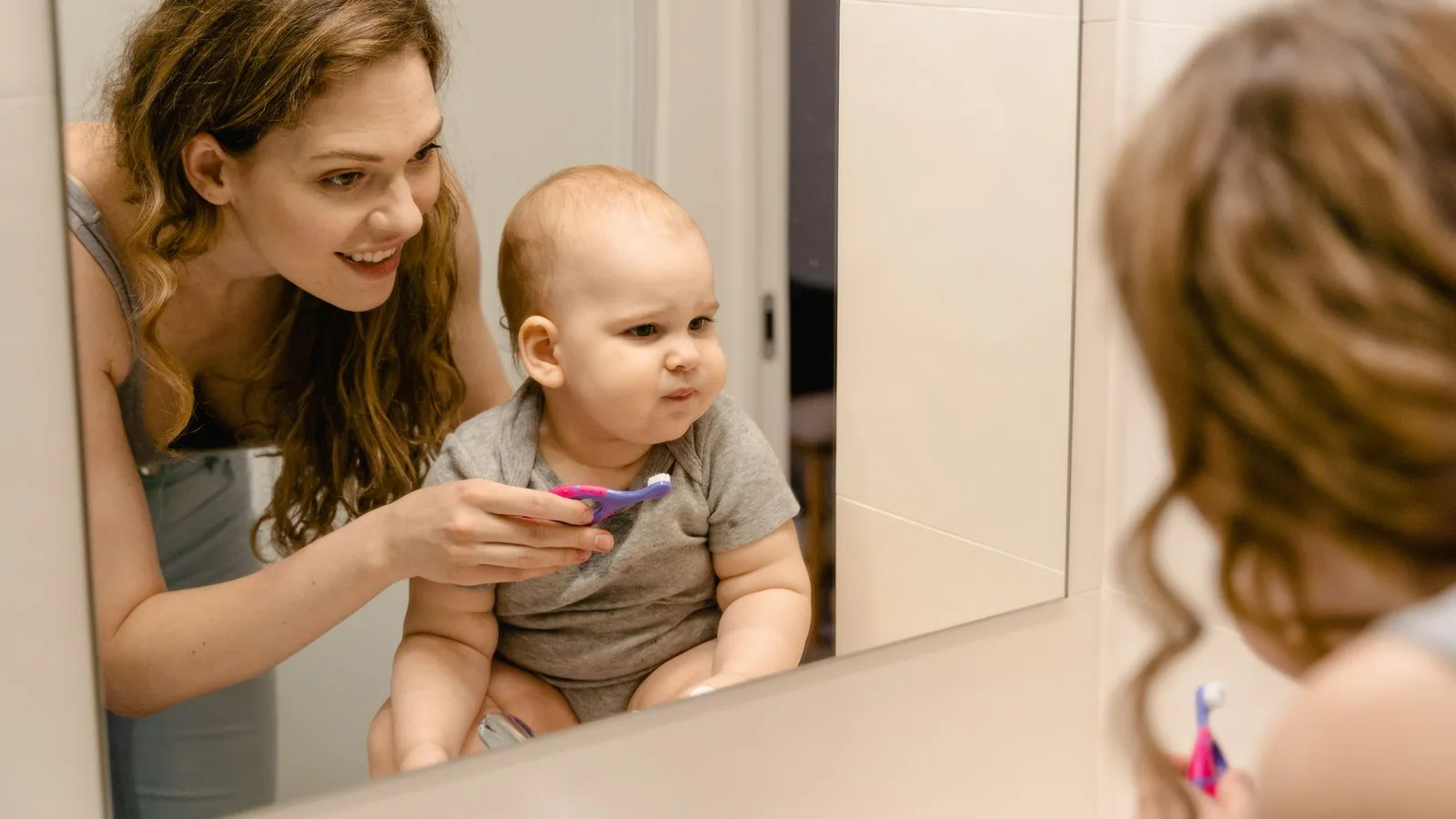
Wipe the gums with a clean damp cloth once a day. It removes residue and, just as usefully, gets the child used to having their mouth handled, which makes the transition to a toothbrush far easier.
First tooth to age three
Start brushing twice daily with a soft infant brush and a rice-grain smear of fluoride toothpaste. Fluoride from the very first tooth is current guidance, and a change from what many parents were told. The tiny quantity is what makes it safe before a child can spit reliably.
Ages three to six
Move to a pea-sized amount. Teach spitting, not rinsing, leaving a little fluoride on the teeth is the point. Start flossing wherever two teeth touch, since a brush can't reach between them.
Ages six to eight
Keep brushing for them or immediately after them. Children don't have the hand control for genuinely effective brushing until around seven or eight, no matter how capable they seem. A reasonable compromise with an independent five-year-old: they go first, you finish.
Bottles, sippy cups, and juice
More early childhood decay traces back to how children drink than to what they eat.
The mechanism is contact time. A bottle or sippy cup carried around all day means teeth are bathed repeatedly, and saliva never gets the uninterrupted stretch it needs to neutralize acid. A bottle in bed is the worst version, because saliva flow drops during sleep.
- No bottle in bed with anything but water. This single rule prevents a great deal of what we treat in preschoolers.
- Move to an open or straw cup around 12 to 18 months. Sippy cups encourage all-day sipping.
- No fruit juice before age one, and a small daily limit for ages one to three. Whole fruit is better in every respect.
- Milk between meals is not a free pass. Milk contains natural sugar, and constant sipping still feeds bacteria.
- Water between meals, ideally tap water in Sacramento, which is fluoridated.
Booking the first visit
Bring your insurance card, any medications your child takes, and their medical history including birth details and any conditions. If they've seen another dentist, we can request the records.
Most PPO plans cover children's preventive visits at or near 100%, and we verify your specific coverage at no charge beforehand. If you don't have dental insurance, our in-house Membership Plan covers two cleanings, two exams, and routine X-rays for a flat annual fee, with discounts on anything else and no waiting periods.
If your child is older than the guideline suggests and has never been, that's a good reason to book, not a reason to feel behind. Call us at (916) 451-4856. If you have more than one child, ask about back-to-back appointments, older siblings going first is one of the more reliable ways to settle a nervous younger one.
Key takeaways
- First visit by age one, or within six months of the first tooth. Most families arrive years later.
- Lift the upper lip and look at the gumline. Chalky white patches there are early decay, and reversible at that stage.
- Young children show tooth pain through behavior, not words: one-sided chewing, refusing cold, night waking.
- Facial swelling, a knocked-out permanent tooth, and pain that stops sleep all mean go now.
- Gaps between baby teeth, teething fussiness, thumb sucking under three, and toddler grinding are normal.
- Avoid benzocaine teething gels under age two.
- Fluoride toothpaste from the first tooth: rice-grain to age three, pea-sized after, and keep brushing for them until seven or eight.
- No bottle in bed with anything but water.
Related services at Cusp Dental
Ready to move from reading to booking?
Keep reading
More from the Cusp Dental blog

FAQ
Frequently asked questions
When should my child first see a dentist?
By their first birthday, or within six months of their first tooth appearing, whichever comes first. That's the shared recommendation of the American Academy of Pediatric Dentistry, the American Dental Association, and the American Academy of Pediatrics. Most parents wait considerably longer, often until age three, usually because nobody told them otherwise. The early visit is less about examining a small mouth and more about catching risk factors while they're still easy to change.
What are the white spots on my toddler's front teeth?
Chalky white spots, particularly along the gumline of the upper front teeth, are usually the first visible stage of tooth decay, before any hole exists. This is the stage where the process can still be halted and often reversed with fluoride and changes to feeding habits. It is also the stage most commonly mistaken for a harmless stain. If you can see white patches that don't brush away, book a visit rather than watching them.
My child's tooth turned grey after a fall. Is that urgent?
It needs evaluation, though it isn't usually an emergency. A baby tooth that darkens to grey, brown, or pink in the weeks after an injury is showing that the nerve inside was damaged. Some settle on their own and stay healthy; others develop infection, which can affect the permanent tooth developing directly underneath. We take an X-ray, check for signs of infection, and monitor. Book within a week or two, and come sooner if there's swelling, a gum bump, or pain.
Will my child need X-rays at their first visit?
Usually not. For a toddler, X-rays add little, because the back teeth typically have gaps between them that we can see through directly. They become useful once the back teeth are touching tightly enough to hide the surfaces between them, which is often around ages four to six. We take images when they'll change a decision, never as routine, and always with a lead apron and thyroid collar.
How much toothpaste should a young child use?
A smear about the size of a grain of rice from the first tooth until age three, then a pea-sized amount from three to six. Use fluoride toothpaste from the very first tooth, this is current guidance and a change from what many parents were told. Children can't reliably spit until around three, and that small quantity is the reason it's safe if some is swallowed. Keep brushing for them, or after them, until about age seven or eight, when their hand control catches up.
Is it too late if my child is already four and has never been?
Not at all, and it's a common situation. Bring them in. The visit looks much the same: a ride in the chair, counting teeth, a gentle look, fluoride varnish, and a conversation about what we saw. Nobody will make you feel behind. The one thing worth knowing is that a first visit at four is more likely to find something that needs treating than a first visit at one, which is the whole argument for going early rather than any judgement about going late.